Terminal end

- Result
- Pass
- Target load
- 19.0 kN
- Maximum load
- 20.1 kN
- Timed hold
- 3 minutes
- Tested
- 3 Oct 2026, 16:56
- Test type
- Line test
On-site pull testing of lifeline ends, eyebolts and structural fixings — a measured proof load, held and recorded, with a certificate for every test.
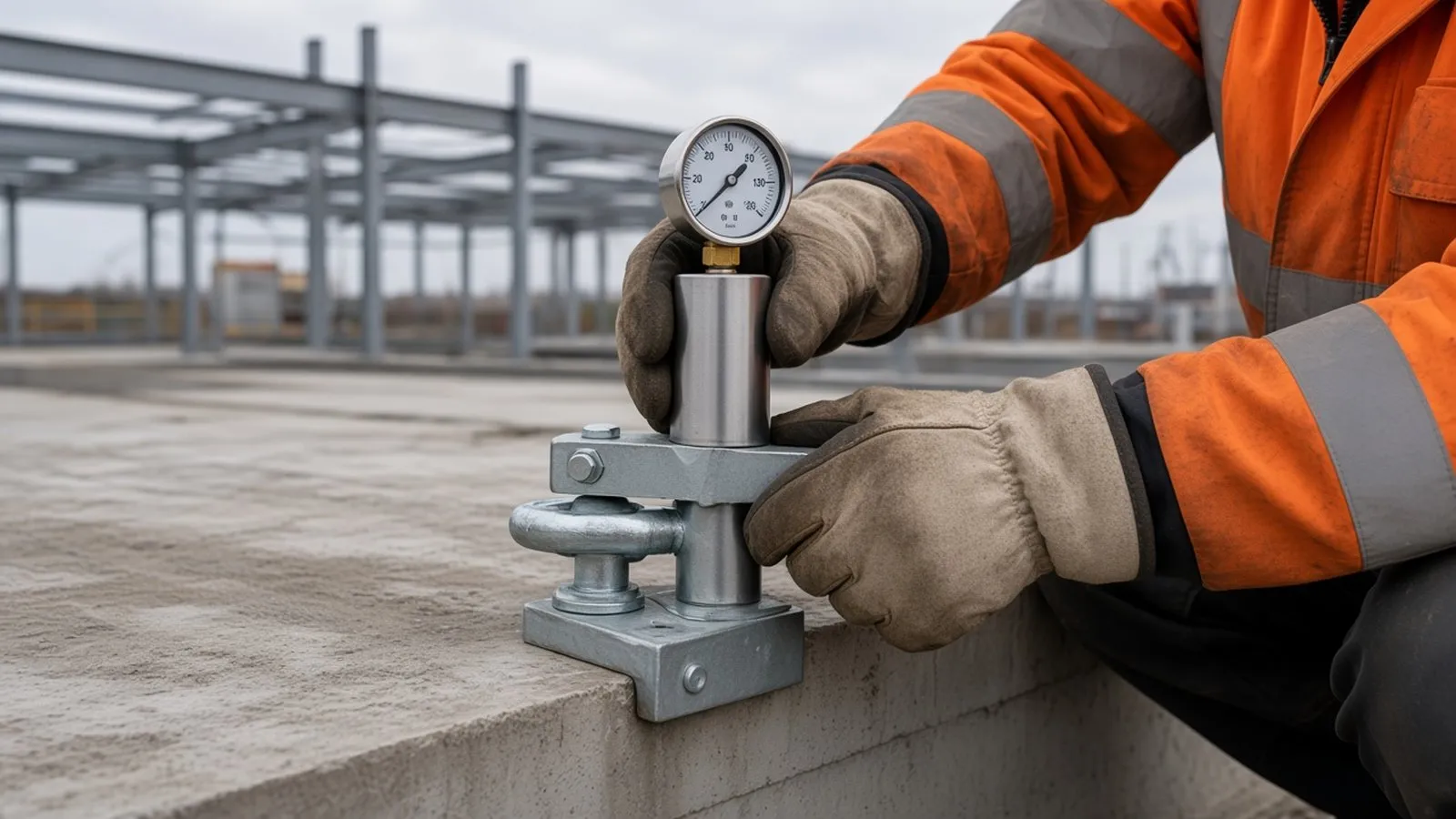
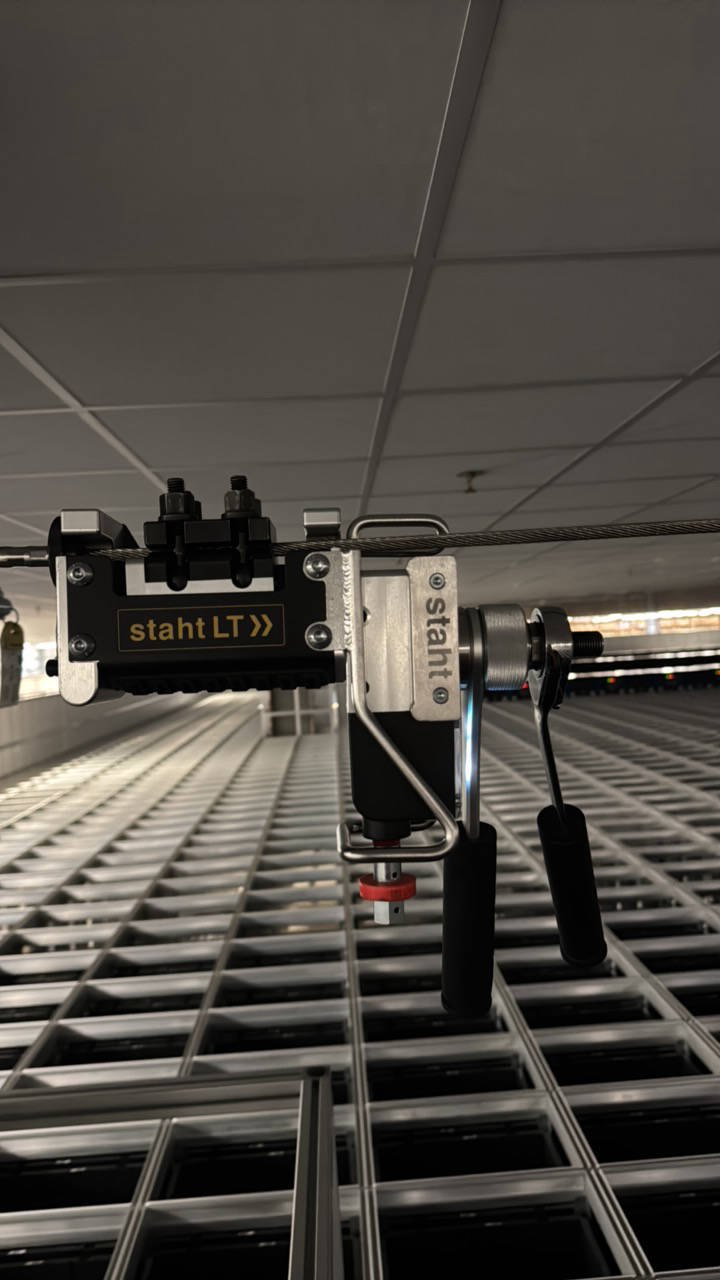
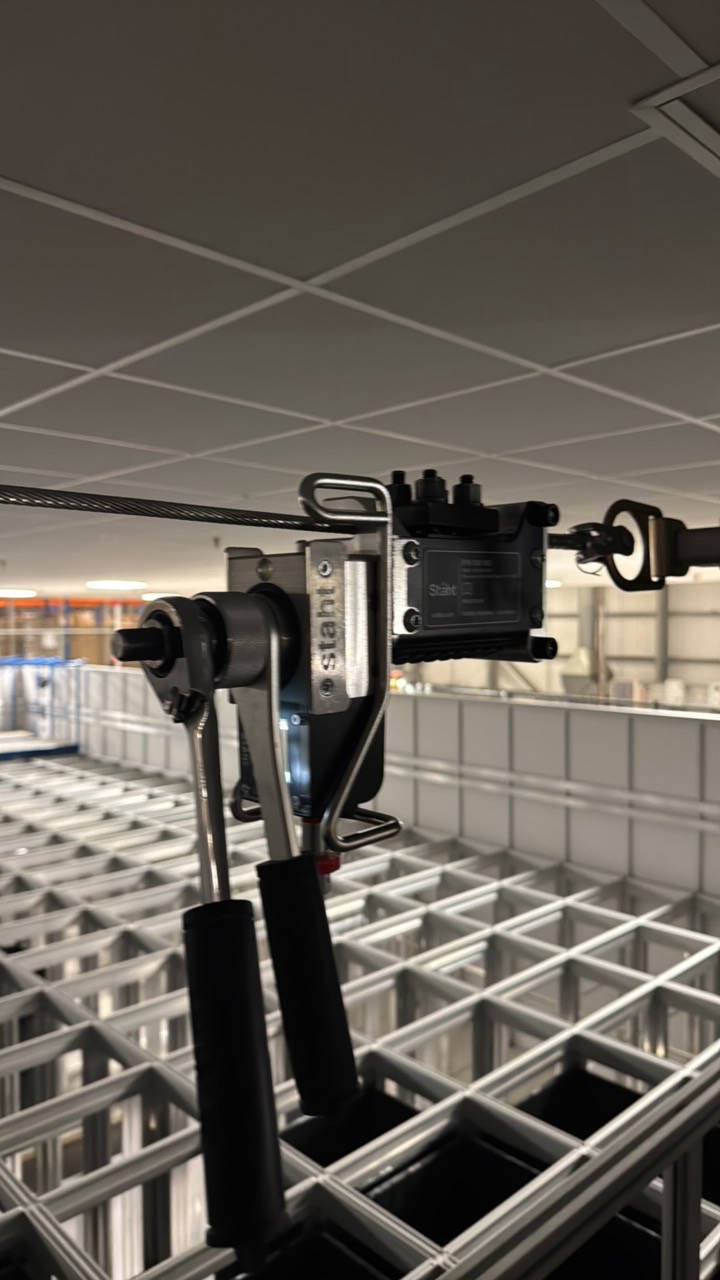
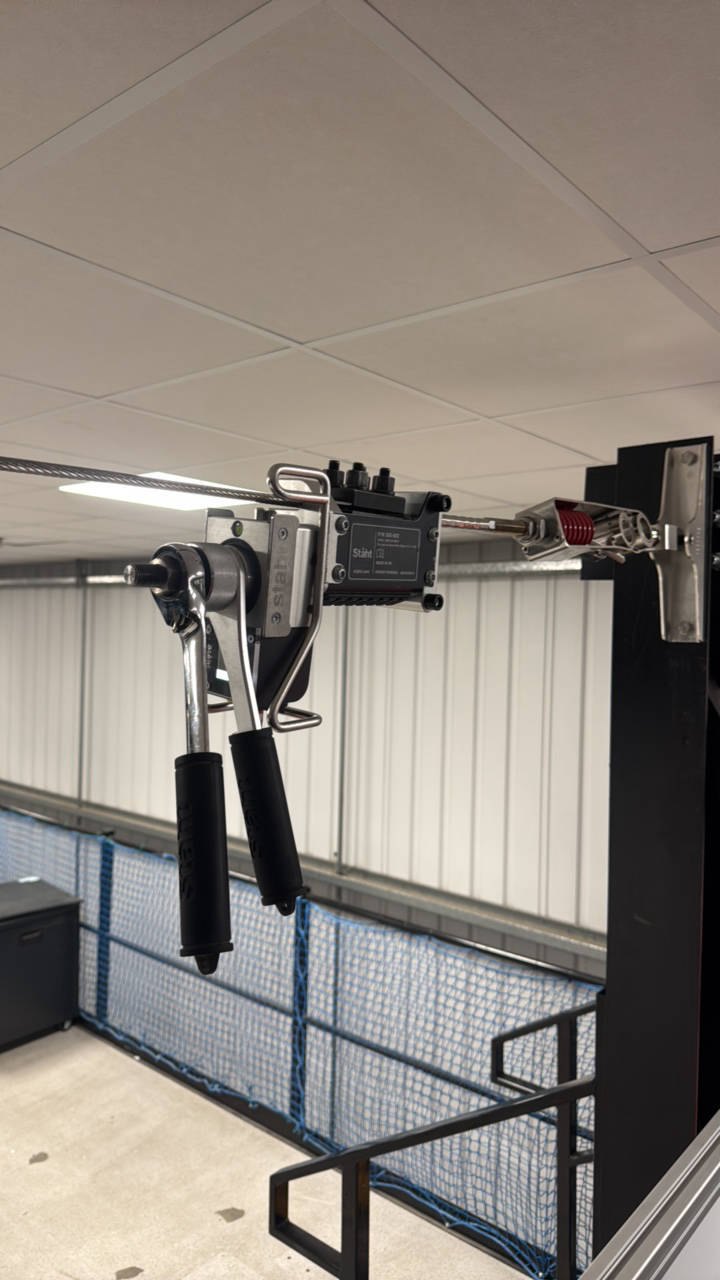
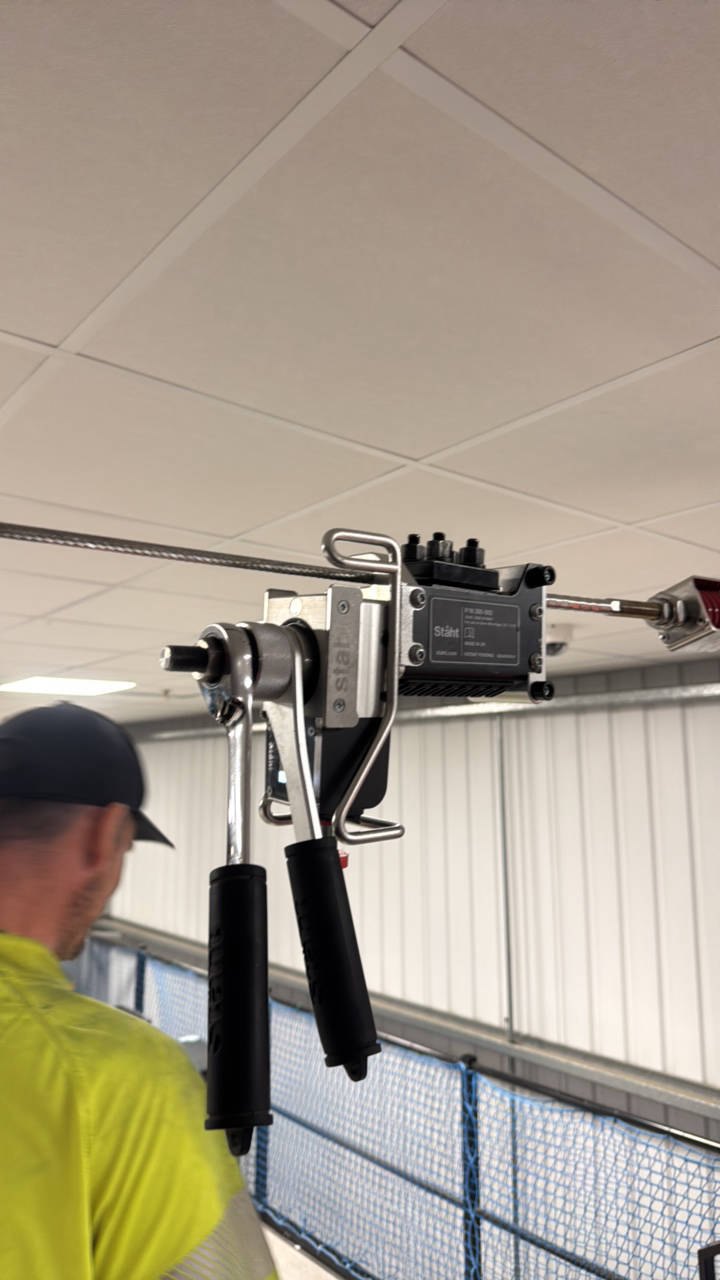
Line test of an overhead lifeline at Hams Hall, Warwickshire. Each end was taken above a 19.0 kN target and held for three minutes. Both ends passed. The figures are from the report issued the same afternoon.

Tested with a Staht 60 kN t60 digital pull tester, model 600-004, serial 562. Calibration certificate STC0002589, issued by Staht Connect on 3 July 2026 and valid until 3 July 2027. Calibration readings were within ±1.5% of full-scale deflection, using equipment traceable to UKAS certificate 15393.
A catalogue load is not the load an anchor will hold in this concrete, this steel or this masonry. Pull testing applies a measured proof load to the installed fixing and records whether it held. Power Comms Structures carries out anchor pull testing across the UK for new installations before they go into service, and for existing anchors when a building owner needs them checked.
Each test is set to the load specified for that anchor — by the designer, the manufacturer, or the standard the system was installed to. We do not invent a pass mark on site.
Typical pull tests cover safety eyebolts, fall-arrest anchors, davit sockets and other designated structural fixings. The tester is set up on the fixing in place, the proof load is applied, and the result is recorded against that anchor’s location. Substrates include concrete, structural steel and masonry, provided the fixing was designed for that background.
Pull testing sits alongside our eyebolt work and davit testing. If the anchors are part of a lifeline or ladder package, the tests can be completed at installation rather than as a second mobilisation.
On a horizontal lifeline the proof is a line test, not a single tug on one bolt. We load the system at the terminal end and again at the tensioner end, bring the force up to the specified target, and hold it for a timed period. The tester records the trace, the maximum load and whether that end passed.
The instrument is a Staht 60 kN t60 digital pull tester. Each report carries the device serial number and the next calibration date. Calibration is traceable to UKAS, so the figure on the certificate is a measured load.
A recent record is the overhead lifeline line test at Hams Hall: both ends passed a 19.0 kN target, held for three minutes, on 3 October 2026.
Every pull test comes back as a report: the system and the end tested, the date and time, the target load, the maximum load achieved, the timed hold, and a pass or fail. The load trace and site photographs sit with that result, and the report records where the test was carried out. Failures are reported the same way, so the fixing can be replaced or redesigned before anyone clips on.
Send a roof plan or a marked-up photograph and the number of anchors or line ends. We will price the visit, confirm access, and tell you what load data we need before we attend.
A line test proof-loads a horizontal lifeline at the terminal end and again at the tensioner end. The specified target is applied, held for a timed period, and recorded as a load trace with a pass or fail for each end.
The load is the figure specified for that system by the designer, the manufacturer or the standard it was installed to. A recent overhead lifeline at Hams Hall had a 19.0 kN target. Both ends were held for three minutes: the terminal end peaked at 20.1 kN and the tensioner end at 20.3 kN. Both passed.
The report names the system and the end tested, the date, the target load, the maximum load, the length of the timed hold, and a pass or fail. It includes the load trace, site photographs, the tester serial number and the next calibration date.
Yes. Tests are carried out with a Staht 60 kN t60 digital pull tester. Each report records the serial number and the next calibration date. Calibration is traceable to UKAS.